Online pickup and delivery keep getting faster and easier at Walmart, and not just at brand-new stores.
The increasingly seamless ecommerce transactions at existing Walmart Supercenters, Neighborhood Markets and other formats are due in part to the Everyday Design work of dozens of HFA architects and engineers. These multidisciplinary teams are part of Walmart U.S.'s ambitious and ever-evolving remodel program.
Their focus is on finding new ways to improve the experience for customers and associates, from the parking lot to the produce aisles to the spacious new store expansions that are ramping up online order-fulfillment across Walmart U.S.'s 5,206 retail units.
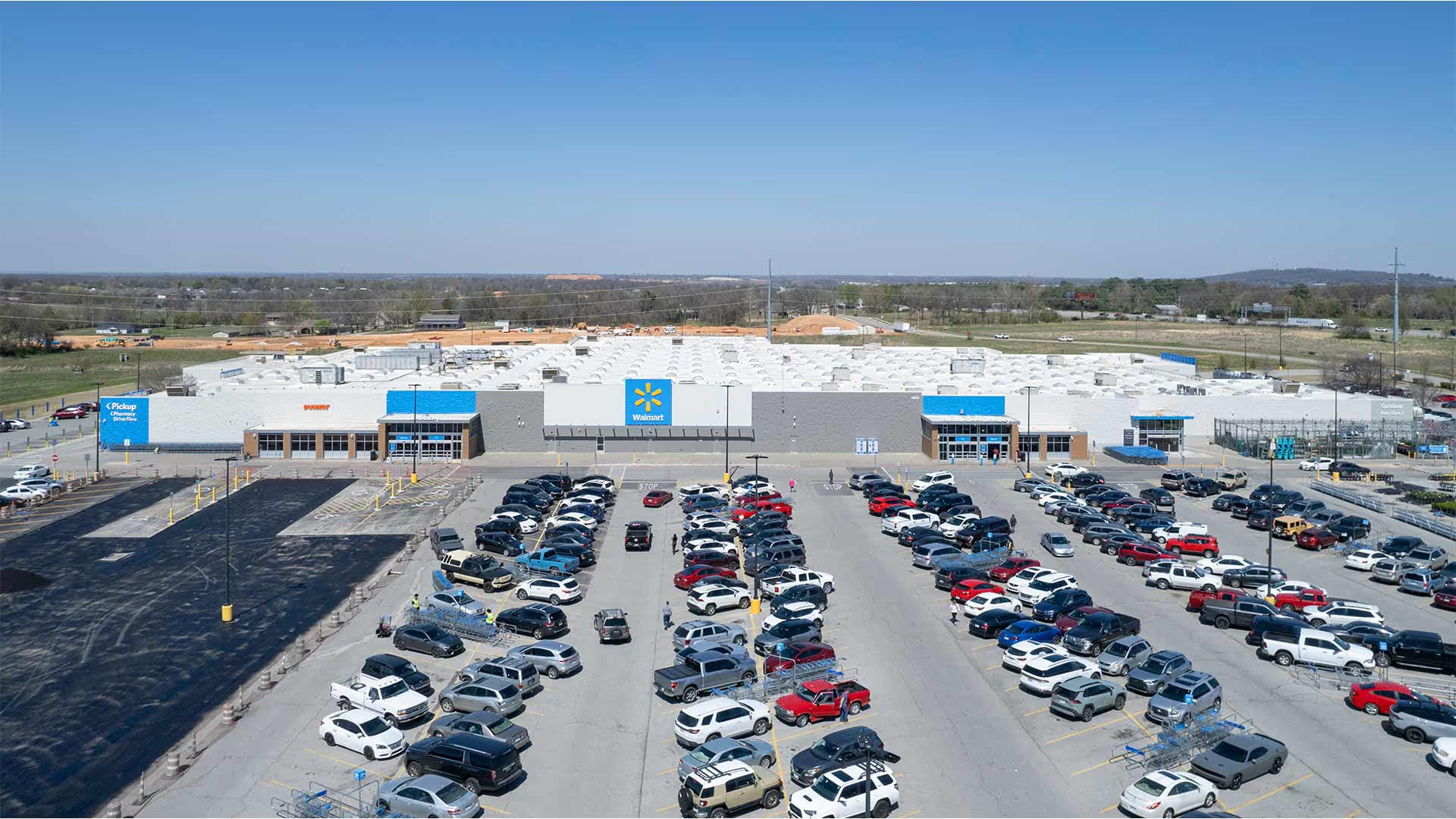
'We are now designing expansions of up to 9,000 or 10,000 square feet for some of the biggest Walmart Supercenters, which process tremendous numbers of online orders every day,' said HFA's Courtney Ayres (NCIDQ, RID), Senior Architectural Team Lead for the Walmart remodel program and a veteran interior designer.
These new buildings store thousands of general and grocery SKUs and boast their own freezers and walk-in coolers. It's an improvement over older approaches in which grocery and general-purpose stockroom space could be cannibalized for fulfillment of delivery and pickup orders. 'It's important to maximize your regular stockroom space so that you can keep the shelves as stocked as possible,' Courtney explained. 'Adding high-efficiency fulfillment capacity for pickup and delivery is a huge evolution.'
These building expansions provide dedicated space for orders to be stored until the customers/delivery drivers arrive for pickup, noted HFA Team Lead Melinda Turner (AIA, NCARB). 'It's a way to overcome the limitations of using the existing stockroom space to boost capacity and fulfill more orders per hour,' Melinda said. 'It reduces friction and increases efficiency for everyone, so it's a win-win.'
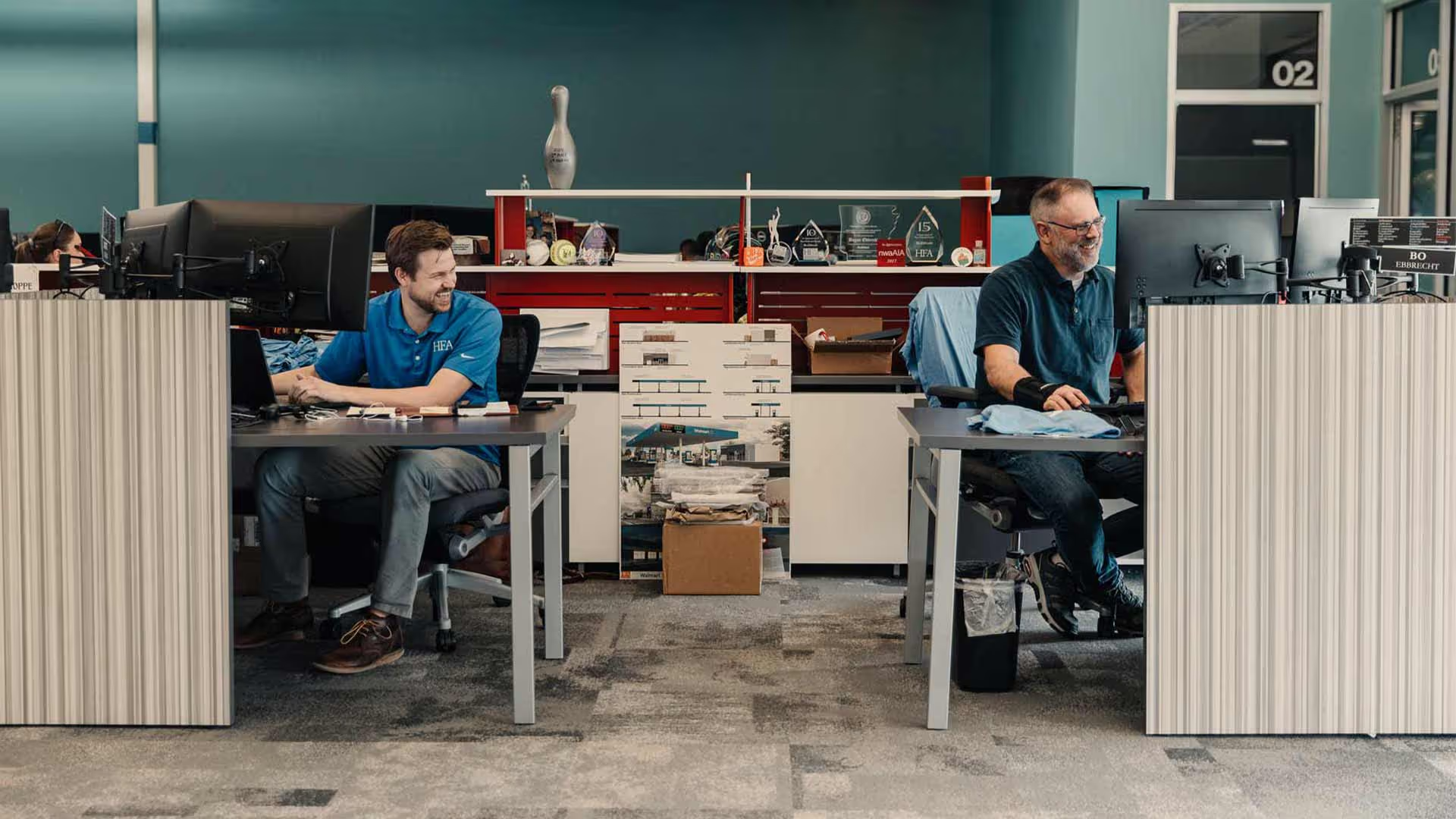
Focused on architecture, Melinda leads a 12-person team within Courtney's larger remodel group of more than 70 architects and engineers. In addition to leading a six-member remodel team, Sarai Martinez also leads a five-member special projects team that manages standalone expansion projects as well as smaller-scope initiatives, for example, exterior branding implemented outside of full-store remodels.
Complex projects, longstanding relationships
Back in 2021, Walmart invited HFA to join a broader design collective comprised of three architectural firms working on various test initiatives. But HFA's relationship with the Bentonville, Arkansas-based retailer goes back more than 30 years. Conducted in collaboration with vendors, consultants and, at times, other civil and structural engineering firms, the remodel program includes ongoing contributions from all of HFA's in-house disciplines. These Everyday Design efforts help shape the day-to-day experience of Walmart customers and associates in large and small ways, Courtney noted.
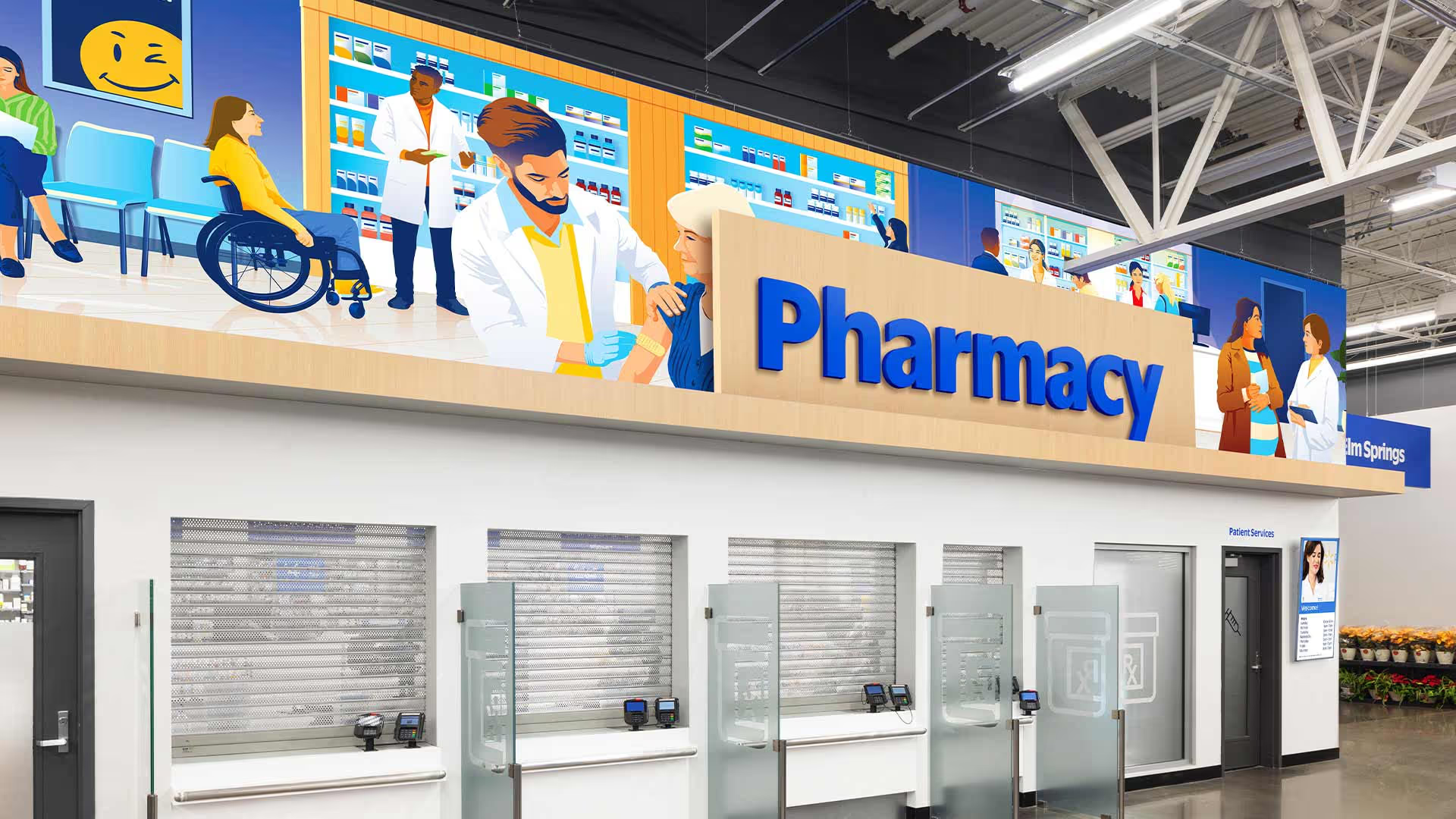
'For example, remodeling and sometimes enlarging the pharmacy is typical scope of work for our projects,' Courtney said. 'This allows for higher capacity and larger volume of customers served, but it also provides a more functional and user-friendly workspace for the associates and the pharmacist.'
Courtney's team also has designed new mother's rooms for Walmart Supercenters. 'As a mother myself, I know that having this place of privacy is something that new moms really appreciate,' she said. 'It's great for Walmart to acknowledge that need.'
The remodel program even touches spaces that many retailers have traditionally ignored, such as breakrooms and the hallways that lead to them. 'Now we're painting and refreshing that entire space,' Melinda said. 'Walmart really wants their associates to feel like they are part of what matters in their store.'

Tackling diverse challenges as a team
Collaboration is part of any Walmart Supercenter remodel project, but the new store expansions take this to another level, from big-picture decisions down to small details.
'At the highest level, Walmart has now charged us with providing recommendations on where the expansion should go on that site, and precisely what the footprint should look like to maximize efficiency,' Courtney said. 'so we're coordinating with our civil partners, doing site evaluations and looking carefully at things like easements and utilities. Then we'll go back to Walmart and say, 'This is the safest and most logical place for the square footage that you want.''
The challenges can vary dramatically from day to day and site to site. 'That could be figuring out the best way to connect to an existing building, or even just dealing with the ground itself,' Courtney said. 'In low-elevation Louisiana, for example, if you dig a hole, it is going to fill with water, so you need to account for that. We just have a wide range of site-specific considerations. It's everything from drive lanes for the trucks to whether the jurisdiction wants stucco instead of CMU [concrete masonry units]. There are a lot of moving parts.'
'Walking in their shoes'
The complexities that can arise on such projects are many, but Courtney and Melinda encourage their teams to use a clarifying lens: Imagining how the experience of customers and associates will be affected by the design decision in question.
'some of it boils down to the jobs we had before we became architects or engineers,' Melinda said. 'That might be, 'Well, when I worked in a retail or grocery stockroom, how would this change have worked for me? Would they have given me a forklift license? What would I have run into in this situation?' We're constantly looking through that lens to find the approaches that will be most efficient.'
Even basic systems like rooftop drainage can affect the day-to-day reality of store associates, Melinda noted. 'Is that downspout where somebody is going to be walking constantly?' she asked. 'How do you make sure that if everything freezes that water runoff is never a safety hazard?'
This imaginative exercise shapes planning for every dimension of these remodel projects. As Courtney explained, 'We're putting ourselves in the mindset of, 'OK, if I were doing this job or if I were picking up these groceries, what obstacles would I be encountering? How can I make sure this experience is as easy and efficient as possible every day?''
It leads to better buildings, inside and out. 'My background is in interior design, so I focus heavily on interior space-planning and things like the path of travel, proximity and ergonomics, while Melinda's training is on the architectural end,' Courtney said. 'It's really about everyone working together, thinking about what we know, and applying that to the project.'
Looking back with pride
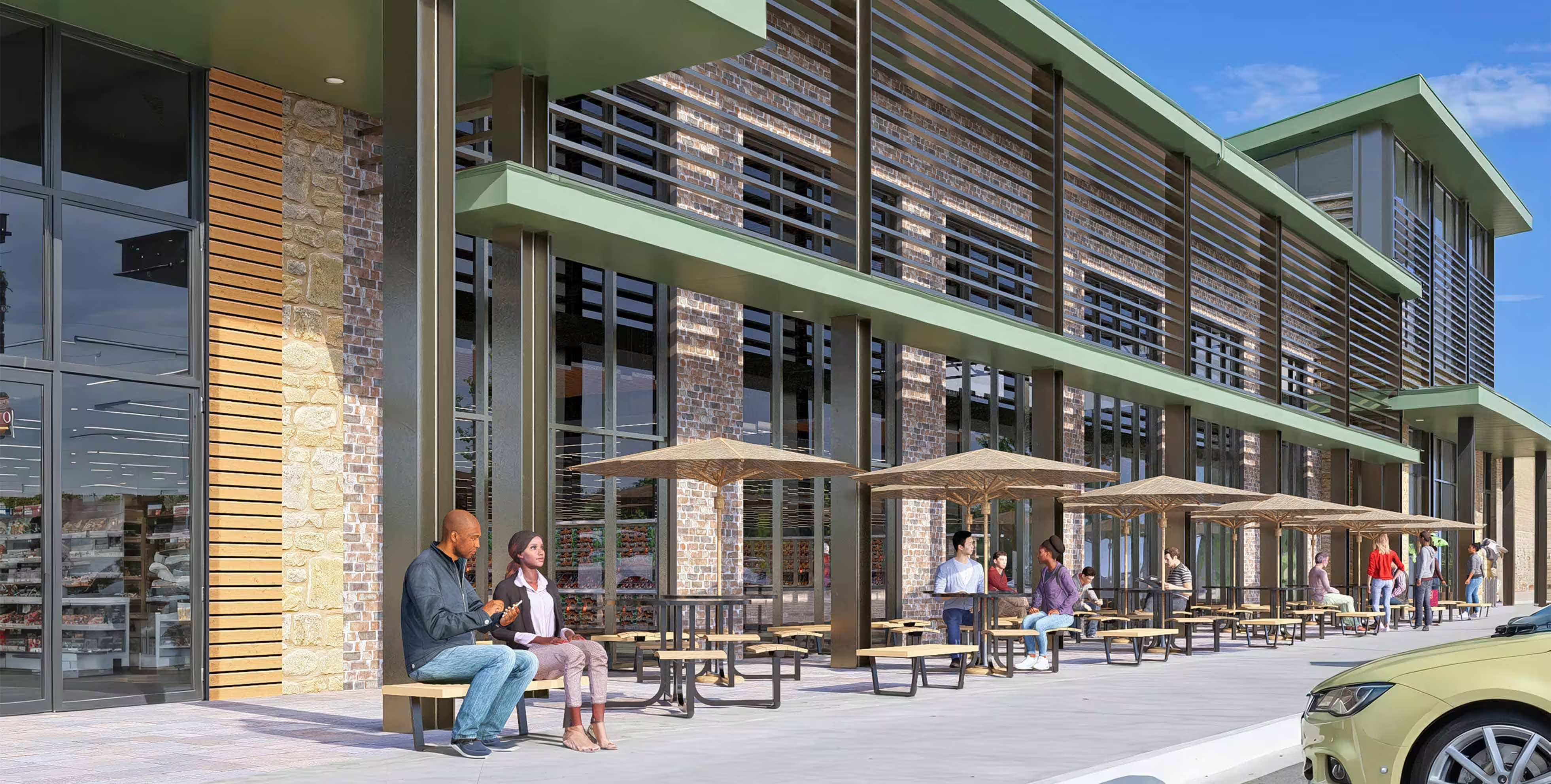
When a Walmart remodel is complete, the public sees the physical improvements but not what went into the total effort, things like negotiating complex code requirements related to parking lot changes and next-generation refrigerants; making sure the structural slabs for the expansion were appropriate for the walk-in coolers and freezers; or adopting the right fire protection and mechanical, electrical and plumbing (MEP) systems to guarantee a safe and efficient building.
But when members of the team stroll through a remodeled Walmart, they remember scoring those wins, Melinda said. They also notice even seemingly small details: new vestibule flooring, LED lighting in the reach-in freezers, a freshly painted wall with Walmart's new wordmark and True Blue and Spark Yellow color palette. 'Believe it or not, we can look at those details and pinpoint within about a six-month period when that store was remodeled,' Melinda said.
Adds Courtney: 'When I shop at a beautiful, remodeled Walmart and say to myself, 'Hey, my team did that!' it makes me so proud of them. It also brings me tremendous pride to see people in a space that is functioning well, with everything working just as intended.'
####
This is the fourth post in our ongoing series about Everyday Design, with earlier pieces introducing the concept and exploring the role of structural engineering and MEP.



.avif)
.avif)